Questions
Is this the official MTO form?
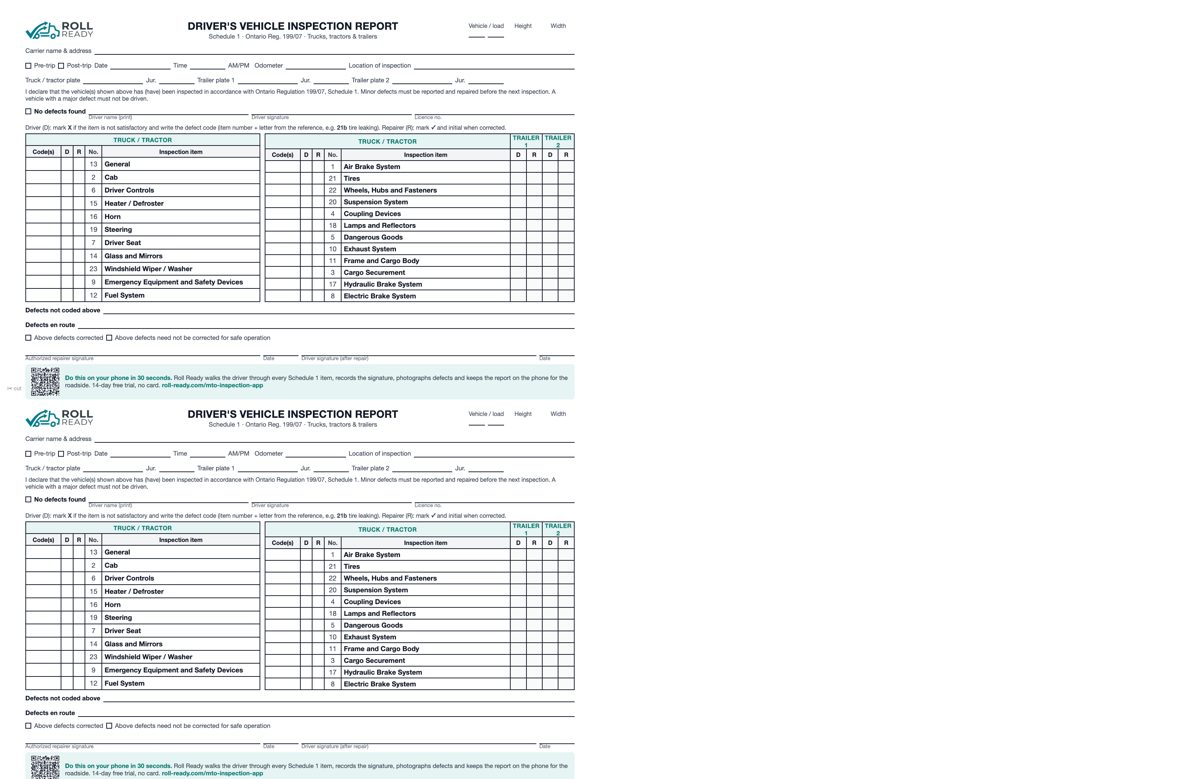
There is no official MTO form. Ontario Regulation 199/07 says what a daily inspection report must contain and lists the Schedule 1 items and defects. Any report that carries that information is valid. This one does, in the regulation's own wording.
What's the difference between a minor and a major defect?
A minor defect gets recorded on the report and reported to the operator, and the vehicle can still be driven. It has to be fixed before the next inspection. A major defect means the vehicle must not be driven until it's repaired. Page 2 lists which is which for every item.
How long do I have to keep the report?
The driver keeps the current report in the vehicle and shows it on demand. The operator keeps completed reports on file for six months.
Does this cover trailers?
Yes. The right-hand block has Trailer 1 and Trailer 2 columns for the items that apply to trailers: brakes, tires, wheels, suspension, coupling, lamps, frame, cargo securement and dangerous goods.
Can I hand this out to my drivers?
Yes. Print as many as you want. It's free to use, and there's nothing to sign up for.